



The Illusion of the Fairy Tale
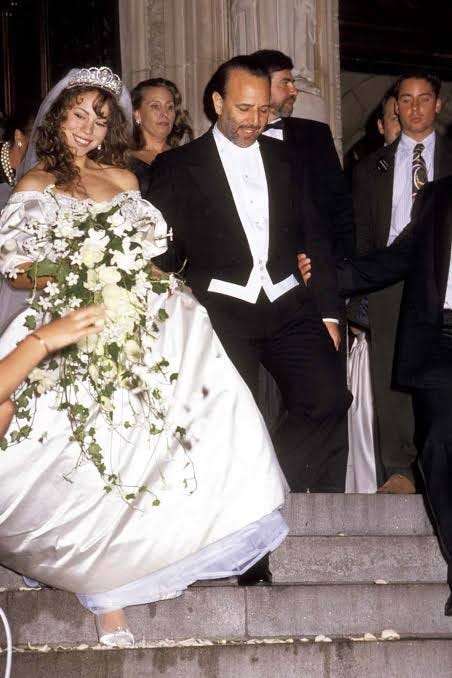
To the outside world in the early 1990s, Mariah Carey’s rise was the ultimate Cinderella story. A teenager working part-time jobs and sleeping on a mattress on the floor handed a demo tape to Tommy Mottola, the head of Sony Music, at a high-society party. Within years, she was selling tens of millions of records, draped in a $25,000 Vera Wang gown, marrying the man who promised to make her dreams come true in a $500,000 royal-style wedding. The ultimate spectacle of love-bombing if you ever saw one.
But beneath the pop spectacle lay a terrifying reality: the fairytale wedding was less an act of love and more a desperate survival tactic. As Mariah would later reveal, she was walking down the aisle in tears, trapped in an escalating system of coercive control.
Understanding how a global superstar ended up held captive in her own home requires looking beyond the music industry. It requires examining how childhood vulnerability lays the groundwork for adult exploitation—and how insidious coercive control truly is.
THE HIDDEN REALITY OF COERCIVE CONTROL
Mariah Carey’s story is a hallmark of coercive control. She wasn’t like Tina Turner, getting physical bruises every day. But she encountered the other side of abuse that never seems to get the respect it is due—coercive control.
As I was researching Mariah’s story, I began to get emotional. While she was a mega star with all the money in the world, she still felt helpless and controlled. On a much lower scale, I felt I went through the same thing. I was a veteran, a woman with a blossoming career in IT, a supportive family, a goal chaser, and a strong breadwinner. But like Mariah, I came from a somewhat rough upbringing that gave me a jaded look on love.
The Pre-Existing Vulnerability — Childhood Trauma
Coercive control rarely happens in a vacuum. Predators and controlling figures often target individuals whose boundaries have already been worn thin by early trauma.
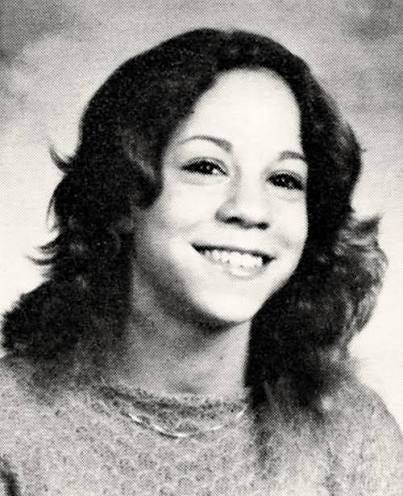
Mariah grew up in an environment plagued by systemic racism, extreme volatility, and emotional neglect. As the youngest child of an interracial marriage in a deeply divided community, her family faced terrifying racial hostility—including neighbors poisoning their dog and burning their car. Within her home, safety was equally scarce.
This chaotic childhood left Mariah with a deep, aching wound: a belief that she was unworthy of being loved as a human being, paired with a desperate need for safety, structure, and home.
UNRESOLVED CHILDHOOD HUNGER FOR LOVE
My father was an addict, and my mother was less available as she worked to compensate for the damage his addiction caused to our household. And when a girl grows up feeling like ‘daddy didn’t choose me,’ that made me hungry for a man’s attention. My father wasn’t abusive to me—let me make that clear—he was just less available due to his consuming drug addiction.
The result of that was both me and my two siblings finding other ways to get attention. In my case, I would go above and beyond to get a boy I liked to pay attention to me. This escalated as I grew older, and I started allowing men access to me when they shouldn’t have been. I put up with men cheating on me, as long as they didn’t leave me. I found myself being that annoying girl who wouldn’t stop pursuing a man when I felt I wanted his attention, so much so that I looked like I was an ‘easy’ girl. And admittedly, I was. This led me to being easy to coerce once I had gotten frustrated enough with the dating world and wanted to be married... and there entered my abusive ex.
Illusion of Safety
When 18-year-old Mariah met 38-year-old Tommy Mottola in 1988, he appeared to be the ultimate protector. He was a powerful corporate executive who possessed the influence to ‘part the seas’ and clear the runway for her musical dreams.
For a young woman who had lived a lifetime of instability, Mottola offered a potent combination of a father figure, business partner, and savior. In her own words: ‘There was never really a strong sexual or physical attraction... but at the time I needed safety and stability... Tommy understood that and he provided.’
When Mariah moved into Mottola’s estate, the protective shelter quickly transformed into an inescapable trap. By the time they married in 1993, Mariah realized the power dynamic was severely skewed. She agreed to marry him primarily out of fear, praying that giving him the ultimate legitimization would cause him to ‘relax his grip’ on her life.
Behind the Golden Gates — Textbook Coercive Control in Action
Coercive control does not require physical chains; it relies on psychological isolation, constant surveillance, and the systematic erasure of autonomy. Mariah’s marriage to Mottola inside their custom-built 51-acre Bedford, New York estate—which she privately dubbed ‘Sing Sing’—is a textbook case study:
24/7 Surveillance and Lack of Privacy: The estate was equipped with motion-sensitive cameras and intercom systems. If Mariah walked into the kitchen for a snack or sat down to write lyrics, Mottola’s voice would crackle over the intercom: ‘Where are you? What are you doing?’, causing her body to freeze. Microphones were planted in walls, forcing her and her guests to whisper. To have private phone conversations, Mariah had to hide inside her shoe closet.
Armed Guards and Physical Captivity: Armed security personnel patrolled the estate. When Mariah and her friend, rapper The Brat, attempted to leave the property without security for a 5-minute drive to get McDonald’s, alarms sounded across the estate, and armed guards were deployed to hunt them down, panicking the team.
Erasure of Identity and Cultural Erasure: Mottola exerted strict control over her image, demanding she dress demurely in high-necked outfits and actively trying to ‘wash the urban off’ her music and appearance to market her solely as a mainstream pop artist.
Threats and Overt Intimidation: The subtle emotional control culminated in overt terror. Mariah detailed a defining moment in their kitchen when Mottola picked up a butter knife and pressed the flat side of the cool metal against her cheek in front of his sons, slowly dragging it down her face to humiliate and intimidate her.
‘My voice was being heard by millions of people... but my actual voice as a woman, as a human being, was really kind of shushed.’

I sympathize deeply with Mariah’s story, mainly because I felt her desire to make up for what she was missing from her childhood. Not feeling fully loved or prioritized as a child can make you an attention-seeking adult. Mariah became enthralled in the idea of a big name like Tommy Mottola showing her any bit of attention, and she was so starved for a need to be loved that she let him have control over her life in the most unhealthy way possible.
I did the same, and gave up my power to a man who would use me as a resource instead of a human. When I heard, in more than one interview, Mariah said that she wanted to be treated like a human... not just a star, I remember feeling that exact same way. When you become a prized possession to a man who is using your talent, resources, or capabilities to make a status for himself, it is the exact recipe for abusive circumstances.
The Turning Point — The Catalyst for Escape
Breaking free from coercive control requires an awakening: a moment where the victim realizes that the environment they are in is not the entire world, and that a healthier reality exists on the outside.
For Mariah, that catalyst came in the mid-1990s through a brief emotional connection with baseball star Derek Jeter. Like Mariah, Jeter came from a biracial family, but unlike Mariah’s family, his was functional, supportive, and grounded. Meeting someone who understood her heritage and treated her with genuine respect shattered Mottola’s illusion of absolute power.
Jeter showed her that she deserved love without captivity. Armed with that realization, Mariah packed a secret ‘to-go bag’ under her bed containing basic essentials, waiting for the moment to make her break. In 1997, after the knife incident, she officially separated from Mottola, leaving behind the mansion and the golden cage.
Emancipation, Triumph, and Reclaiming the Narrative
Leaving an abuser is rarely the end of the battle; dynamic abusers often use their systemic power to retaliate. After Mariah left Sony, Mottola used label resources to sabotage her projects—stealing musical samples intended for her album Glitter to give to other artists and attempting to ruin her career. The immense pressure and exhaustion eventually led to a publicized physical and emotional breakdown in 2001.
Yet, Mariah’s story is not a tragedy; it is a masterclass in resilience and self-determination:
Reclaiming Her Voice: In 1997, she released Butterfly, an album that marked her creative and personal liberation. In 2005, she achieved one of the greatest comebacks in music history with The Emancipation of Mimi, topping global charts on her own terms.
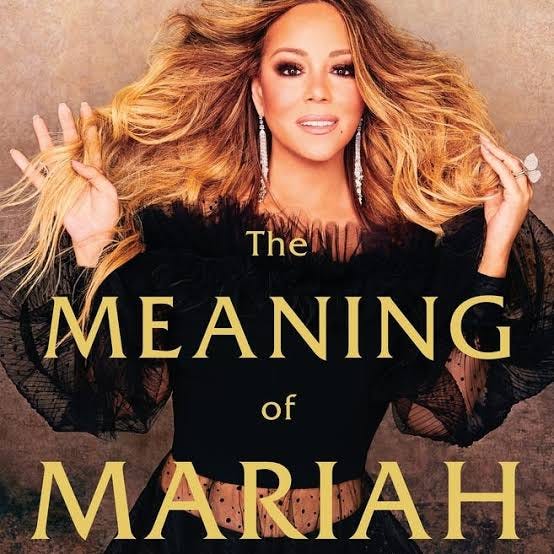
Owning Her Truth: In her 2020 memoir, The Meaning of Mariah Carey, she laid bare the exact mechanics of her survival, speaking truth to power and reclaiming her legacy from those who tried to take credit for her genius.
The Essential Lessons — Protecting Your Dream
Mariah Carey’s journey offers profound lessons for anyone navigating control, abuse, or systemic oppression:
Emotional Abuse is Real Abuse: You do not need to be physically battered to be abused. Isolation, micro-surveillance, and the denial of human dignity are severe forms of violence.
Material Wealth Does Not Equal Safety: A 51-acre mansion can be as much of a prison as a locked room. Never invalidate someone’s pain because their surroundings look luxurious.
Your Core Worth Belongs to You: As Mariah wrote in the closing of her memoir: ‘If I have learned anything in this life worth sharing, it is protect your dreams... You can’t let anybody define, control, or take away your vision of your life—not your mother, brother, sister, father, spouse... boss, bully, bigot, or manager. In the end, and in the beginning, it’s all about faith.’
No matter how tight the cage, your voice can never be fully silenced unless you give up on your right to sing. Reclaiming your life begins with a single step toward the door.
To anyone reading this who has ever felt used as a resource, silenced, or stripped of their autonomy: know that your past does not define your capacity for freedom. Whether you are stepping out of a toxic marriage, reclaiming your career, or breaking free from childhood patterns, you hold the power to reclaim your narrative.
Your story is yours alone to write—and no one gets to hold the pen but you.
Steffie Jean-Lee is a survivor of domestic abuse and coercive control. She is the founder of SJL C.E.O Society and has a personal mission to share her testimony with others that may be lost in the fog of abusive relationships and employment. All advise given on this platform is meant to encourage survivors to educate and free themselves of their trauma, while encouraging recovery efforts.
If you are experiencing domestic violence or emotional abuse, please remember that seeking safety is not a failure of faith — it is an act of courage and wisdom.
God does not call you to remain in harm. Support and protection are available.
You can reach the National Domestic Violence Hotline at 1-800-799-SAFE (7233), text START to 88788, or chat at thehotline.org.
If you are in immediate danger, please call 911.
